
Aluminium vs uPVC Windows: Which Is Better for Chandigarh Homes?
Choosing new windows for your Chandigarh home is one of those decisions you live with for the next 20 years, so it pays to get it right. If you have started collecting quotes, you have probably heard two names again and again: aluminium and uPVC.
Both are excellent modern framing materials, but they behave very differently in Chandigarh’s climate, cost different amounts, and suit different kinds of homes. This guide breaks down the real-world differences so you can decide with confidence.
What Chandigarh homeowners should know before choosing a frame
Chandigarh sees a bit of everything: scorching 44 degree summers, a heavy monsoon, dusty pre-monsoon winds, and cool winters. Your window frame has to handle heat gain, keep dust and rain out, seal against noise from busy sectors, and still look good after years of sun exposure.
Before comparing materials, think about three things: your budget, which direction your windows face, and how much maintenance you are willing to do. A west-facing living room in Sector 22 has very different needs from a north-facing bedroom in a quiet lane.
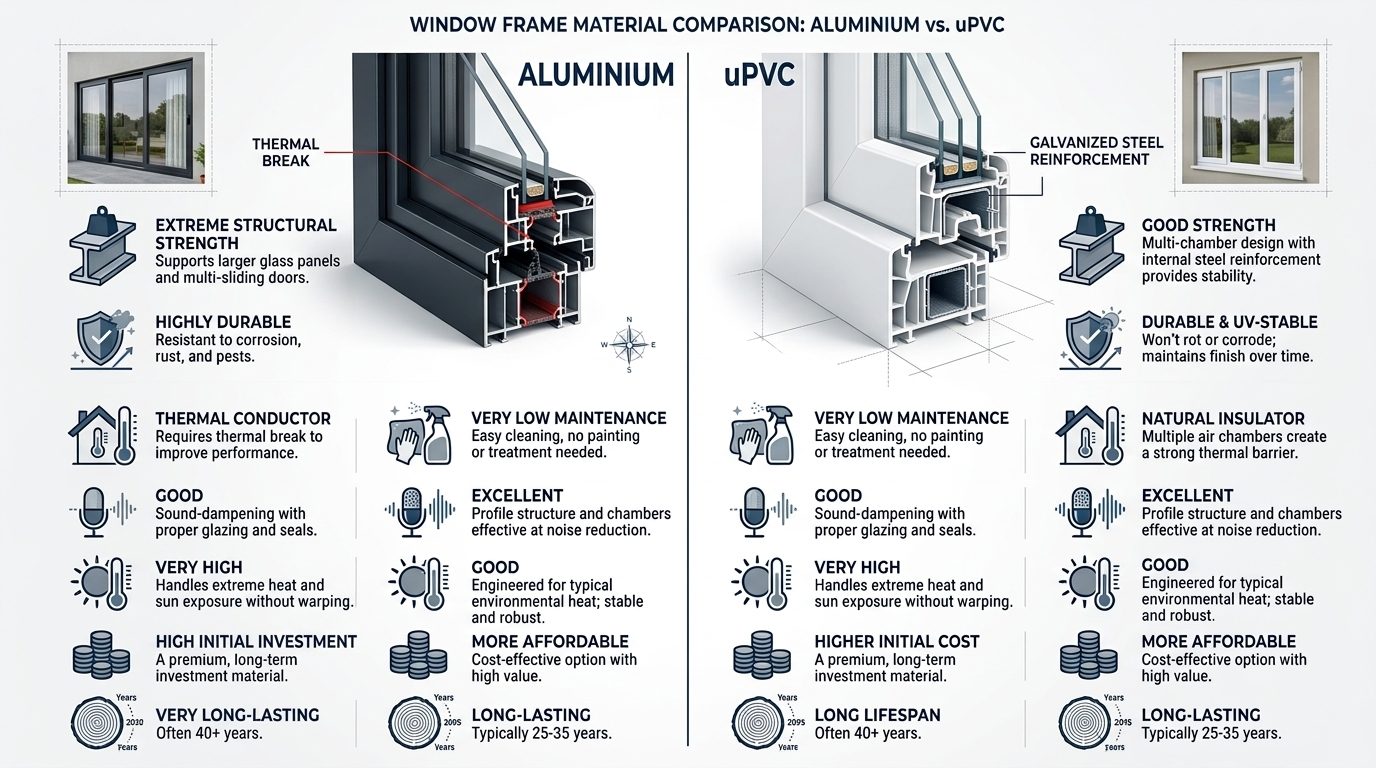
Aluminium windows: pros, cons and ideal use cases
Aluminium frames are strong, slim, and can carry large panes of glass, which makes them ideal for wide views and minimalist modern facades. They are highly durable, resist warping, and are essentially fireproof.
The trade-off is that bare aluminium conducts heat and cold easily, so a basic aluminium window can make summer cooling more expensive unless it has a thermal break. Aluminium suits large sliding doors, balconies, commercial fronts, and homeowners who want a sleek industrial look and long structural life.
uPVC windows: pros, cons and ideal use cases
uPVC (unplasticised PVC) frames are naturally insulating, so they keep heat out in summer and warmth in during winter. They seal tightly against dust, rain, and noise, and they never rust, rot, or need repainting.
The main limitations are that very large spans may need steel reinforcement, and quality varies a lot between cheap and premium profiles. uPVC is the go-to choice for bedrooms, homes near busy roads, and anyone prioritising comfort, energy savings, and low maintenance.
Head-to-head: cost, insulation, maintenance and lifespan
On upfront cost, basic aluminium and basic uPVC are often close, though premium thermally broken aluminium can cost more than uPVC. On insulation, uPVC clearly wins for keeping your home cooler and quieter.
On maintenance, uPVC needs only occasional cleaning, while aluminium is also low-maintenance but can show wear on painted finishes. On lifespan, both easily last 20 years or more when installed well. On strength for very large openings, aluminium has the edge.
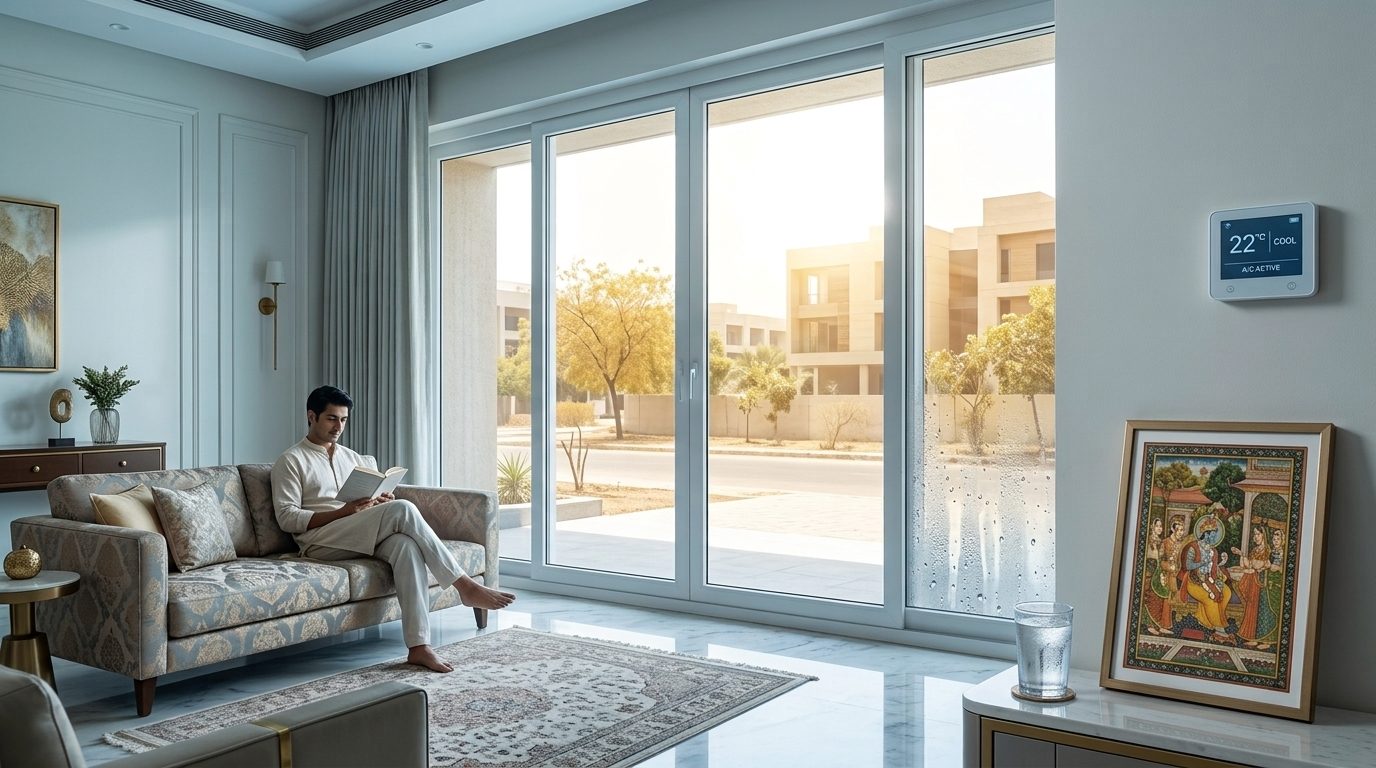
How Chandigarh’s summers and monsoon affect your choice
During peak summer, uPVC’s insulation can noticeably reduce how hard your AC works, which shows up on your electricity bill. During the monsoon, both materials resist water, but uPVC’s multi-point sealing tends to keep driving rain and humidity out more effectively.
Dust is a Tricity reality, and tight uPVC gaskets help keep interiors cleaner. If your priority is a cooler, quieter, lower-dust home, uPVC has a slight overall advantage in local conditions.
Which is better for flats vs independent houses
In apartments and flats, where noise from neighbours and roads is common and window sizes are standard, uPVC is usually the better all-round pick.
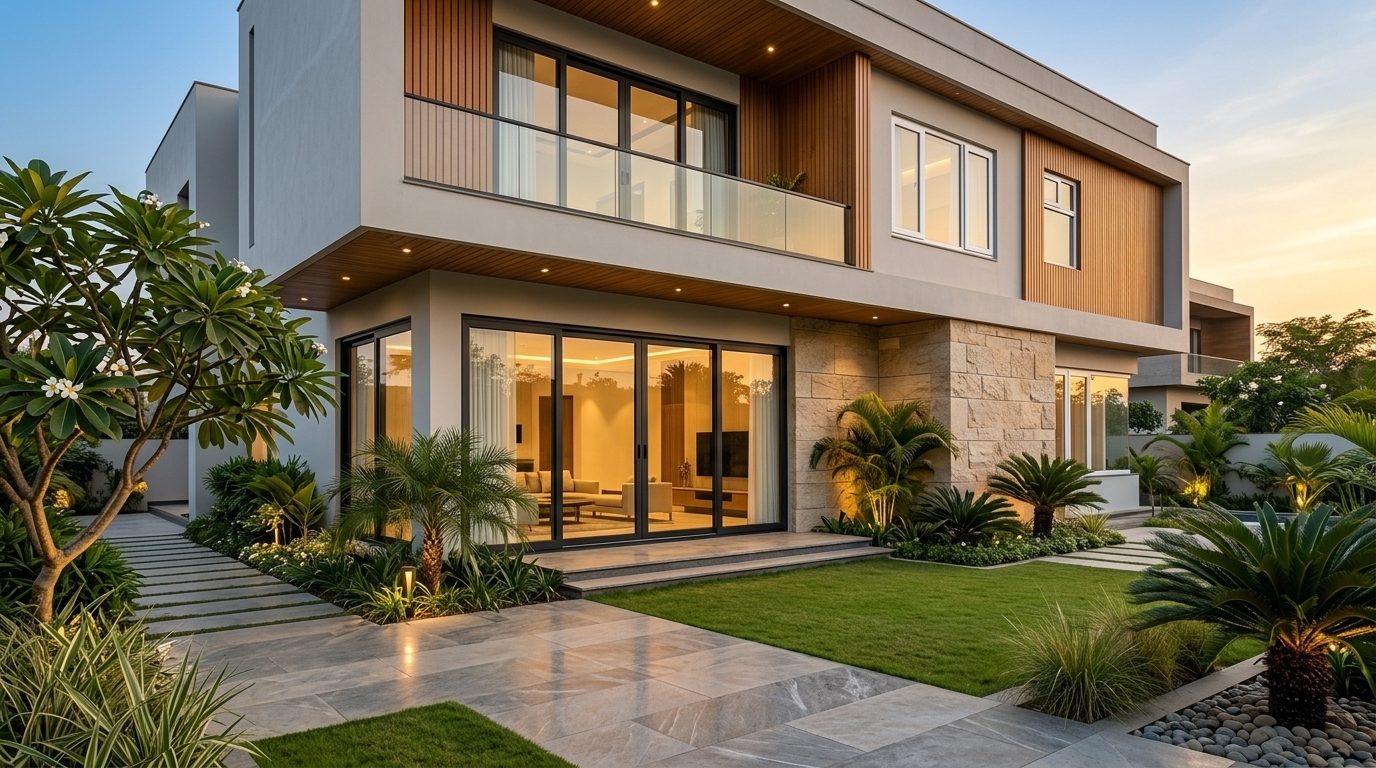
In independent houses with large picture windows, wide sliding doors, or a modern architectural style, aluminium (ideally thermally broken) lets you achieve bigger, slimmer glass expanses. Many Chandigarh homeowners actually mix both: uPVC in bedrooms for comfort, aluminium sliders for the living room and balcony.
Energy efficiency and long-term running costs
When people compare aluminium vs uPVC windows for Chandigarh homes, they often focus only on the upfront price and forget the running cost over 20 years.
In a city where air conditioners run for four to five months a year, the frame you choose has a direct effect on your monthly electricity bill. uPVC is a natural insulator, so it slows the transfer of outdoor heat into your rooms and helps your AC hold a set temperature with less effort.
Bare aluminium, by contrast, conducts heat quickly, which can turn a sunny frame into a small radiator by mid-afternoon. If you prefer aluminium for its slim looks, a thermally broken profile with an insulating barrier closes much of this gap.
Pairing either frame with double glazing pushes efficiency further, and for west and south facing rooms that take the worst of the Chandigarh sun, that upgrade usually pays for itself in comfort and lower bills.
Design, finishes and resale appeal
Windows are one of the first things a visitor notices, so appearance matters as much as performance. uPVC frames come in clean white as well as woodgrain and coloured laminates, giving a neat, contemporary look that suits most Chandigarh flats and family homes.
Aluminium offers ultra-slim sightlines and a premium, architectural feel that works beautifully on modern independent houses, large picture windows, and glass-heavy facades. Both materials hold their finish far better than old timber, which fades and peels in the harsh Tricity sun.
From a resale point of view, well-chosen, sealed windows signal a well-maintained home and can quietly support your property value, especially in sought-after sectors where buyers expect quality fittings.
Installation quality and choosing the right partner
Even the best frame underperforms if it is fitted badly. Gaps, weak anchoring, and poor sealing let in dust, water, and noise no matter which material you picked, so the installer matters as much as the product.
Look for a supplier who measures each opening properly, uses quality hardware and gaskets, and finishes the joints cleanly. Ask to see completed projects in and around Chandigarh, and confirm the warranty on both the profile and the fittings. A good partner will also help you decide, room by room, where aluminium makes sense and where uPVC is the smarter choice, rather than pushing a single material for every window.
Ready to decide?
The Inspire Windoors team can visit your Chandigarh home, assess each room, and recommend the right frame for your budget and comfort. Contact us today for a free consultation and quote.
Frequently Asked Questions
Basic versions are similar in price, but premium thermally broken aluminium usually costs more than premium uPVC.
Yes. uPVC does not conduct heat the way bare aluminium does, so interiors stay noticeably cooler in summer.
Both last 20-plus years when properly installed; aluminium resists physical impact better, while uPVC resists weather and corrosion better.
Yes, especially with double glazing and tight gaskets, making them ideal near busy Chandigarh roads.
Yes. Aluminium’s strength lets it carry big glass panels with slim frames, which is why it is the go-to choice for wide balcony sliders and large living-room openings.
uPVC generally seals tighter thanks to multi-point locking and gaskets, so it tends to keep pre-monsoon dust out more effectively, though a well-fitted aluminium window with good gaskets also performs well.
Start with each room’s direction, noise exposure, and your budget. A common approach is uPVC for bedrooms and street-facing rooms and thermally broken aluminium for large living-room and balcony openings.
Very little. Both resist the sun, rain, and dust far better than wood, and usually need only occasional cleaning and a check of the seals and hardware.
Absolutely, and many Chandigarh homeowners do exactly that. Using uPVC where insulation and quiet matter most and aluminium where you want large, slim glass gives you the best of both materials in one home.
Both resist water when installed well, but uPVC’s tight multi-point sealing gives it a slight edge against driving rain and humidity, helping prevent seepage around the edges during heavy spells.
For west and south-facing rooms that take the full afternoon sun, yes. The upgrade noticeably cuts heat gain and noise, so your cooling runs less and your rooms stay comfortable through the peak of summer.
With quality profiles and proper installation, both aluminium and uPVC windows comfortably last 20 years or more here, holding their seal, colour, and smooth operation despite the harsh summers, monsoon, and dust.
Clean, well-sealed windows in either material signal a well-maintained home to buyers, but energy-efficient uPVC or thermally broken aluminium with double glazing tends to be the most attractive upgrade in the Tricity property market.


0 Comments
No comments yet. Be the first to share your thoughts!