
uPVC Windows in Chandigarh: Sliding or Casement for Your Room?
Sliding windows suit rooms where a swinging sash would get in the way. Casement windows are worth considering when there is enough opening clearance and you prefer a hinged sash that closes against perimeter seals.
The right choice depends on your room layout, ventilation needs and cleaning access. When comparing uPVC windows in Chandigarh, start with how you will use the window every day—not just how it looks when closed.
Space and Opening Direction
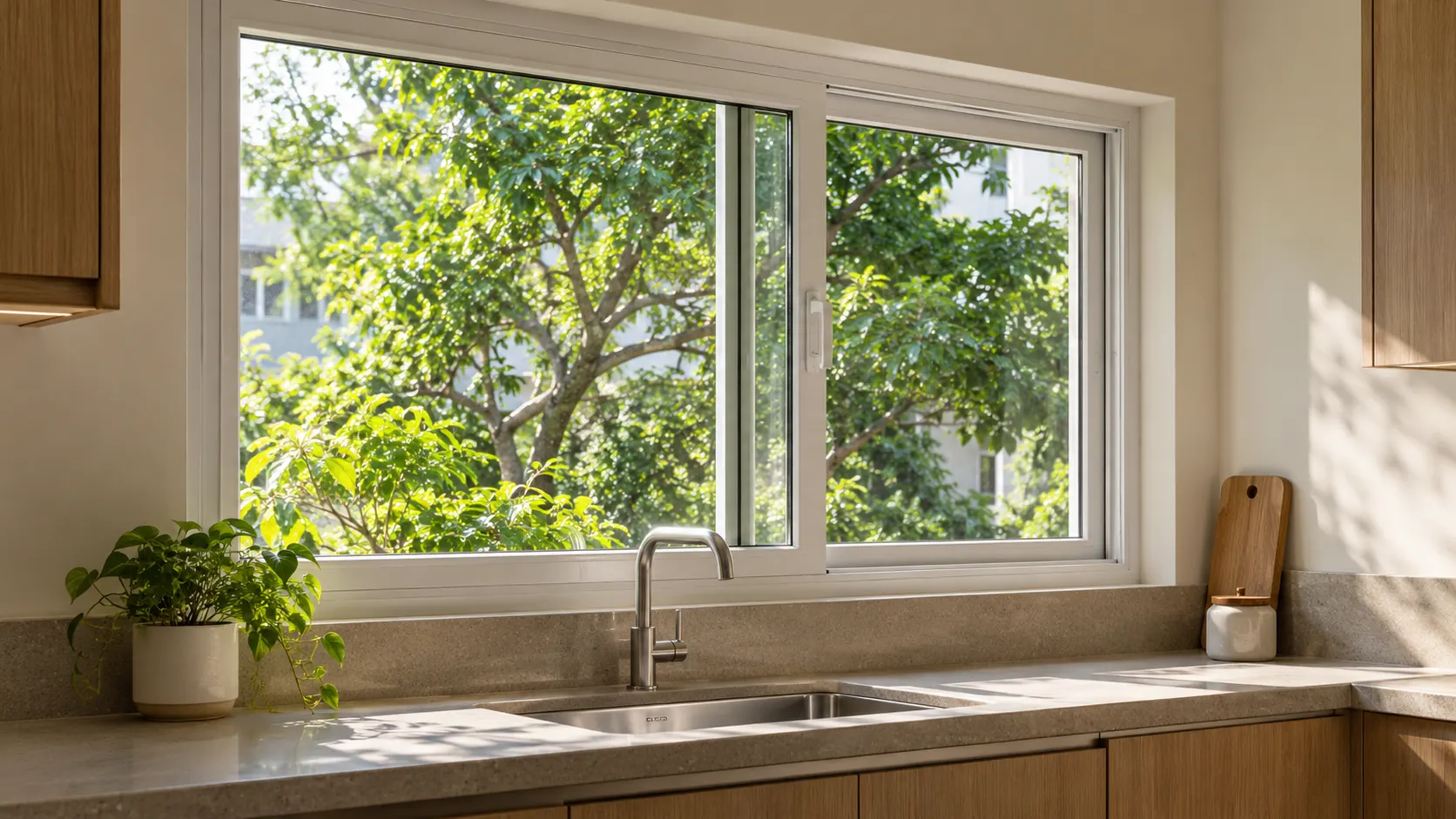
Sliding windows: useful beside furniture and narrow balconies
Sliding panels move sideways within the frame, so they do not need space to swing into the room or beyond the opening.
This makes them a practical option above a kitchen counter, near furniture or beside a narrow balcony. However, the panels overlap, and the usable opening depends on the track and panel arrangement.
Before choosing, ask to see which panels move and how much clear opening remains. Also check that you can reach the handle comfortably once your furniture is in place.
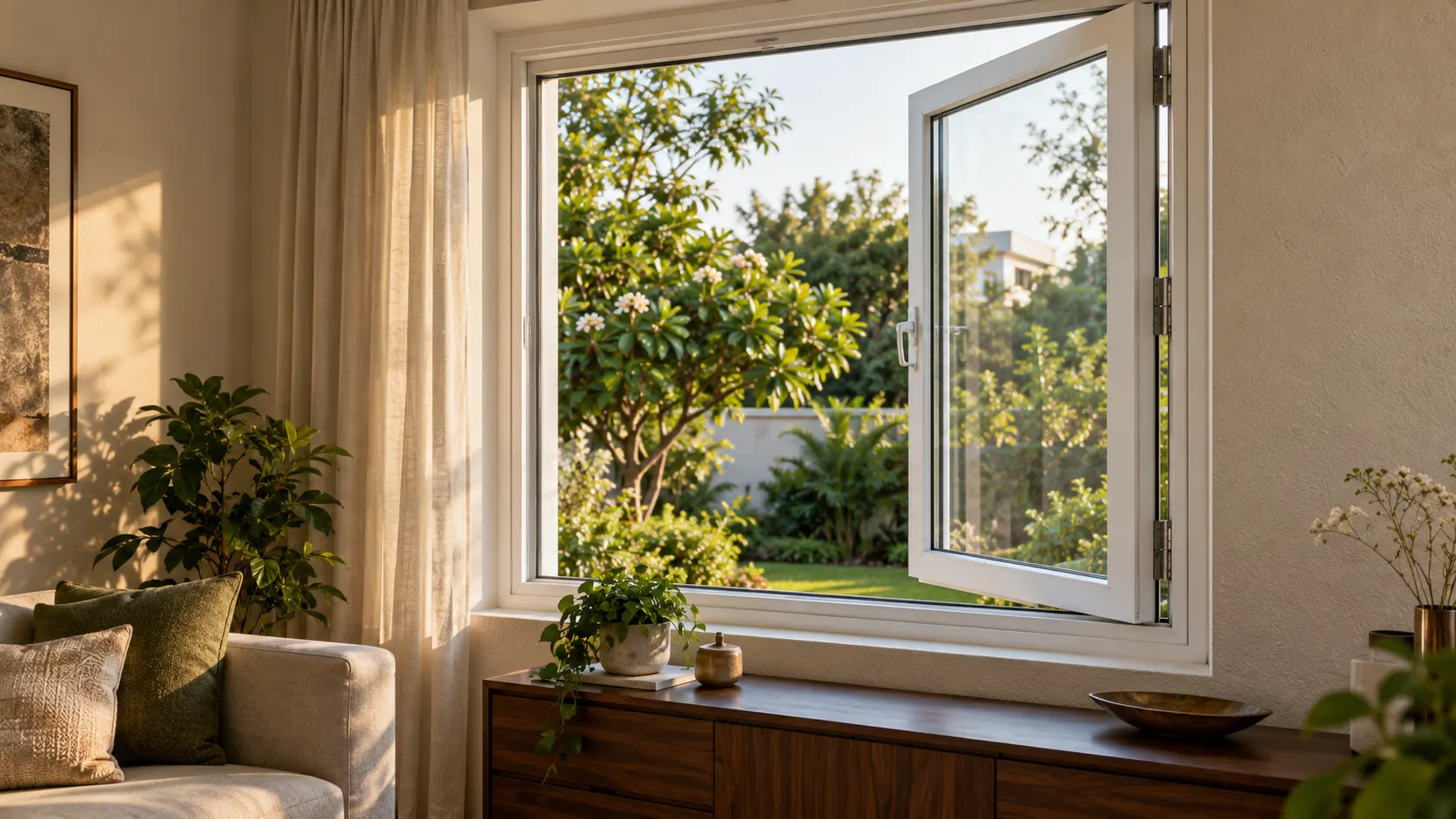
Casement windows: allow room for the sash to swing
Casement windows open on hinges. Depending on the design, the sash may open inward or outward.
An inward-opening sash can interfere with curtains, blinds or items on the sill. An outward-opening sash needs clearance from grilles, adjacent walls and balcony areas.
Ask for an opening drawing that shows the hinge position and direction of movement. A window that looks suitable in a catalogue may become awkward beside a wardrobe or behind a fixed grille.
Unsure which opening will fit? Send your window photo to Inspire Windoors. Include the surrounding furniture, counter or balcony so the available space is visible.
Ventilation
Compare the clear opening
Two windows with the same overall dimensions may provide different openings for ventilation.
With sliding windows, the clear opening depends on how the panels overlap and travel along the tracks. With casement windows, it depends on the opening angle, hardware and any fitted restrictor.
Ask to see the proposed configuration open, then check:
- How much of the window opening is clear?
- Does the grille or mosquito mesh restrict movement?
- Can you reach and operate the handle easily?
- How is the window secured in its intended ventilation position?
Consider airflow through the whole room
Opening style is only one part of ventilation. Window position, nearby obstructions and other openings also matter.
For example, a bedroom with one external window needs a different assessment from a living room with openings on two sides. Explain whether you usually keep the room door closed, use air conditioning or prefer regular natural ventilation.
Choose a configuration you can comfortably open and use—not simply the largest available size.
Seals
Check the actual system being quoted
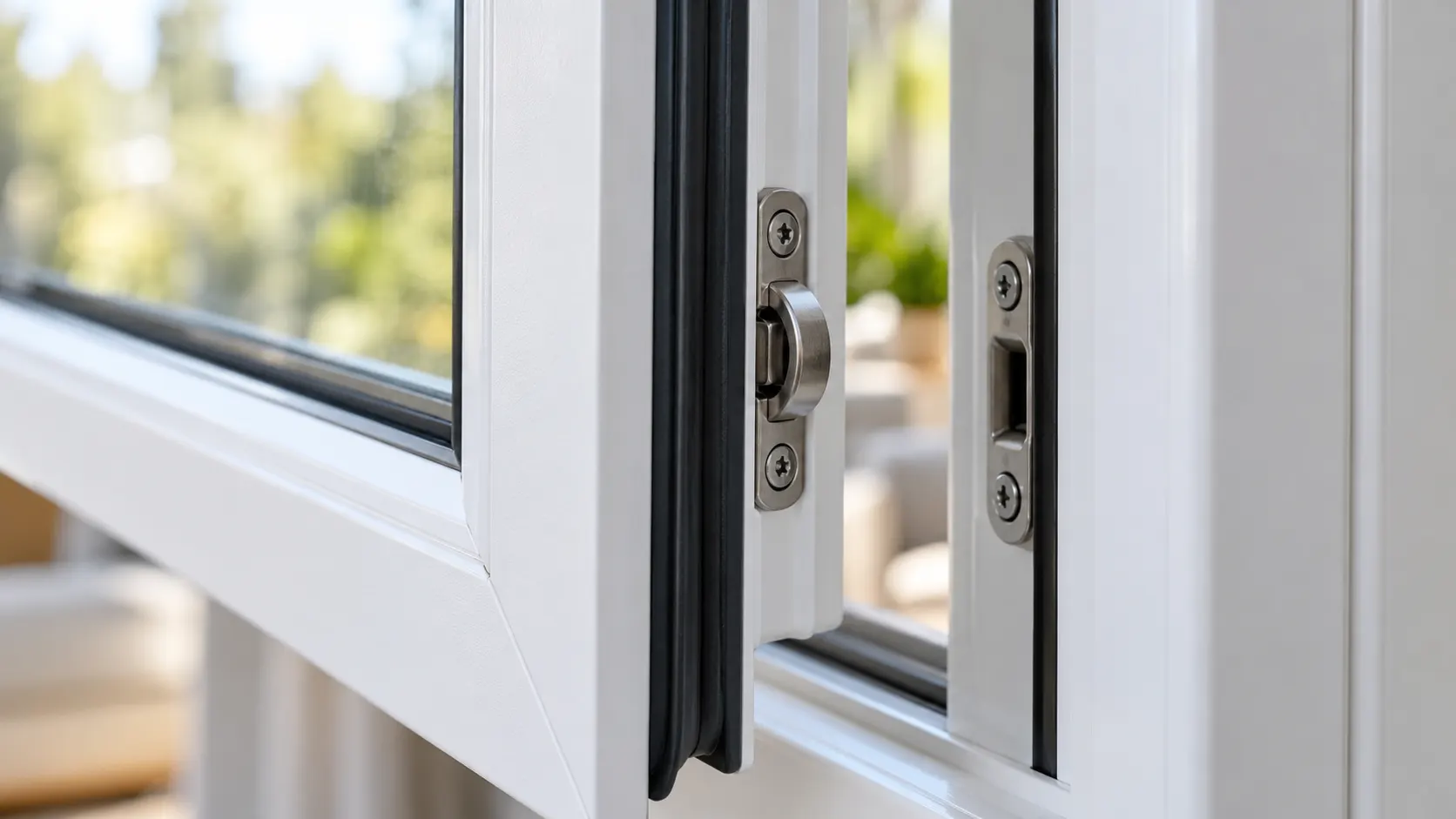
The frame material alone does not determine how a finished window performs. Seals, glass, hardware and installation all matter.
Casement systems typically use locking hardware to bring the sash against perimeter gaskets. Sliding systems may use brush seals, gaskets or a combination, depending on their design.
Ask the supplier to demonstrate the closing arrangement on the actual system being quoted. A general description cannot confirm the performance of a particular window.
Open and close the demonstration window yourself
Look for smooth movement, consistent closing contact and handles that operate without excessive force.
For a sliding window, inspect the tracks, panel meeting points and locking action. For a casement window, check the hinges, locking points and how evenly the sash meets the frame.
Also ask how the tracks and drainage paths should be cleaned, and how seals or moving parts can be serviced.
If outside noise is a concern, discuss the complete assembly. Opening style alone cannot establish the result; glass specification, sealing and installation also need consideration.
For a meaningful price comparison, keep the opening dimensions, panel arrangement, glass, mesh and installation scope consistent across quotes.
Room Examples
The following examples illustrate buying decisions rather than completed installations.
| Room situation | Style to consider | What to check |
|---|---|---|
| Bedroom beside a narrow balcony | Sliding | Clear opening, mesh movement and cleaning access |
| Bedroom with sufficient opening clearance | Casement | Curtains, grille clearance, opening direction and handle reach |
| Kitchen window above a counter | Compare both | Comfortable operation around the counter and tap |
| Living room with a wide opening | Compare both configurations | Which panels open, ventilation needs and access to fixed glass |
| Upper-floor room without outside access | Assess cleaning access first | Safe access to the outer face of every pane |
Bedroom: think beyond the empty room
Imagine the bed, curtains and bedside furniture already in position. Can you reach the handle? Will a hinged sash catch the blind? Can the window and mosquito mesh work together comfortably?
If the bedroom faces a busy road, request a discussion about the full window specification before choosing an opening style.
Kitchen: check handle reach
A window above a sink can become difficult to operate once the counter and tap are installed.
Check the proposed handle position against the finished kitchen layout. You should also understand how the glass and frame will be cleaned without standing on the counter.
Living room: decide which panels need to open
A wide glazed area does not necessarily need every panel to move.
Discuss where ventilation is needed, which sections can remain fixed and how each opening panel will be used. Ask for a drawing that clearly identifies fixed glass, sliding panels and hinged sashes before approving the order.
Planning new windows or replacing an existing opening? Send your window photo to Inspire Windoors for help choosing between sliding and casement. Include a wider room view and mention any nearby furniture, counter, grille or balcony.
Frequently Asked Questions
Sliding windows usually suit spaces where a swinging sash would obstruct furniture or a narrow passage. Their panels move within the frame, although handle access, track cleaning and the usable opening still need checking.
Check how you will safely reach the outside face of every pane, including fixed glass and overlapping sliding panels. Ask the supplier to demonstrate any cleaning-access feature included in the quote. Do not assume that a sash is removable or fitted with special hinges.
Yes. Discuss how the mesh will move, how it affects access to the window and how it can be cleaned. Include the chosen arrangement in the opening drawing and quote.


0 Comments
No comments yet. Be the first to share your thoughts!