
Glass Railing Cost Per Running Foot in Baddi
Glass railings bring a light, open, modern look to staircases, balconies, and terraces, which is why more homeowners in Baddi are choosing them.
But one of the first questions everyone asks is simple: what does it cost per running foot?
The honest answer is that the price varies based on the glass grade, whether the design is framed or frameless, and the quality of the fittings.
In this guide we explain exactly how glass railings are priced, what pushes the cost up or down, and give sample per-running-foot estimates so you can budget your Baddi project with confidence.
How glass railings are priced
Glass railings are usually priced per running foot, which simply means the cost for each foot of railing length along your staircase or balcony. This makes budgeting easier, because you can measure the total length you need and multiply it by the rate.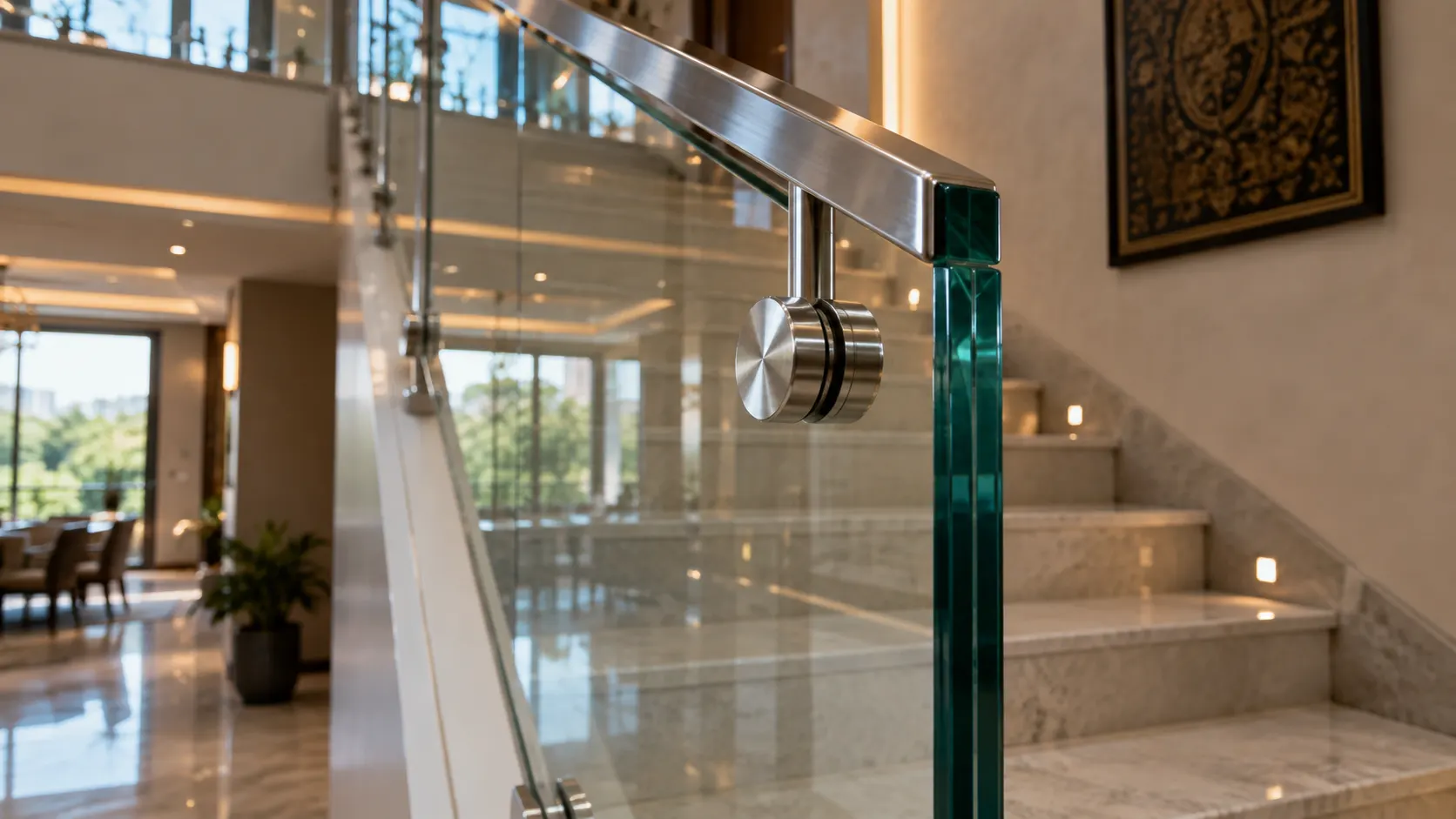
However, the per-running-foot rate itself changes depending on the glass thickness and grade, the mounting system, and the hardware. Height also matters, since taller panels use more glass.
Understanding this per-running-foot logic is the first step to estimating what your Baddi project will cost.
Glass grade and thickness impact
The single biggest factor in the price is the glass itself. Thicker toughened glass costs more than thinner glass, but it is also stronger and safer, which is essential for railings.
For most homes, 12mm toughened glass is a common choice, while frameless designs or taller balconies may use thicker or laminated glass, which pushes the rate up.
Laminated toughened glass costs more again but is the safest option for elevated areas because it holds together if broken. Choosing the right grade for safety, rather than the cheapest option, is always the wise decision.
Framed vs frameless cost difference
Whether you choose a framed or frameless design has a real effect on the per-running-foot cost. Framed railings, which use aluminium or steel posts and channels, are generally more affordable because the frame shares the structural load and allows thinner glass.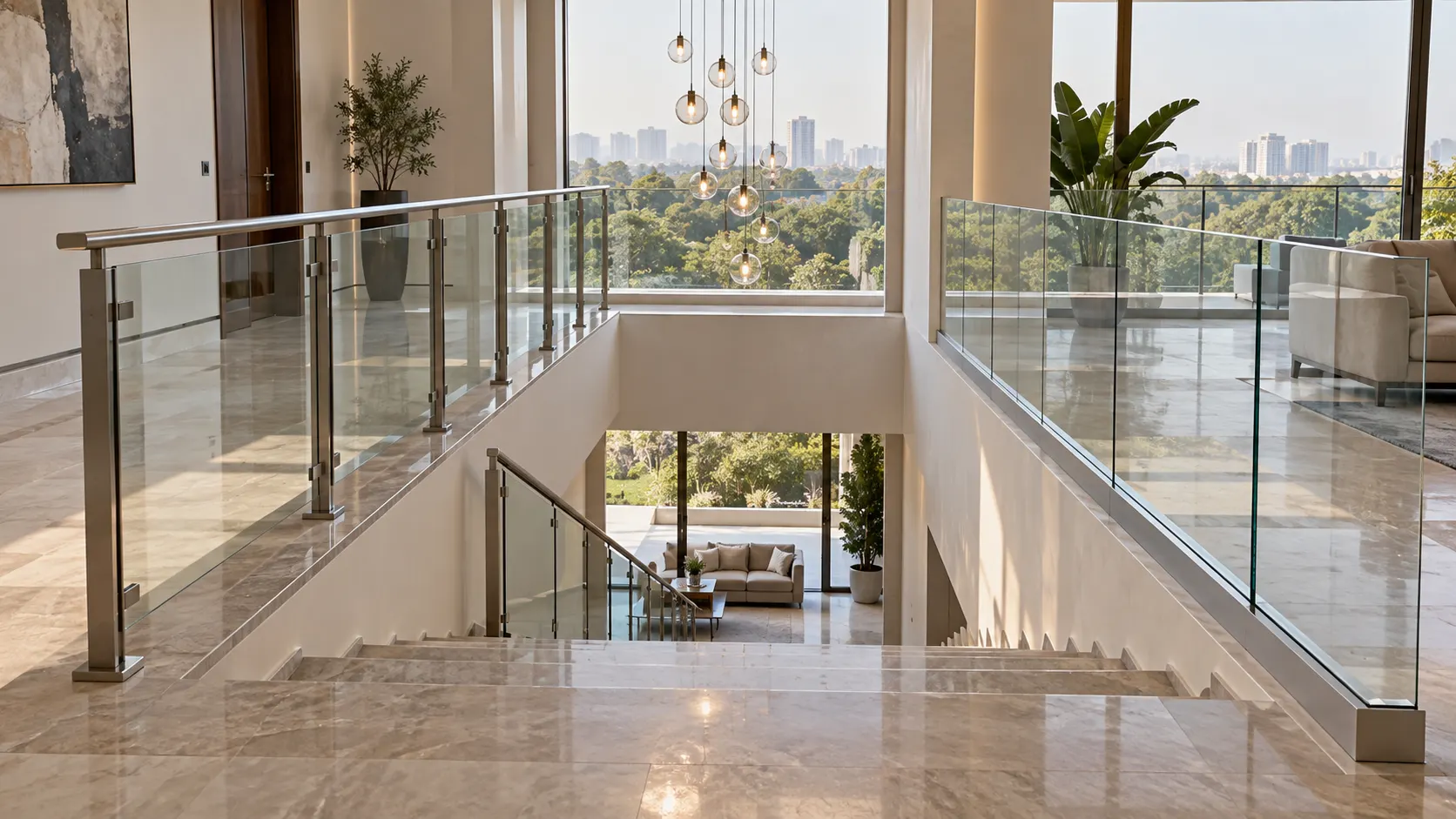
Frameless railings, held by discreet base channels or standoff pins, cost more because they rely on thicker glass and precision fittings to stay strong and safe without visible supports.
The frameless look is stunning and popular in modern Baddi homes, but it is worth knowing that this premium aesthetic comes at a higher rate.
Hardware and fittings cost
The fittings you cannot always see still make a big difference to both cost and durability. Quality stainless steel base channels, standoffs, clamps, and handrails resist corrosion and keep the railing safe and steady for years.
Cheaper fittings may lower the upfront rate but can rust, loosen, or fail over time, which is a serious risk for a safety barrier. When comparing per-running-foot quotes in Baddi, always check what grade of hardware is included, because a slightly higher rate with premium stainless fittings is usually far better value in the long run.
Sample per-running-foot estimates
While exact figures depend on your specific choices, it helps to think in ranges. A basic framed glass railing with standard toughened glass sits at the lower end of the per-running-foot scale, a mid-range frameless design with 12mm toughened glass and stainless fittings sits higher, and a premium frameless railing with thick or laminated glass and designer hardware sits at the top.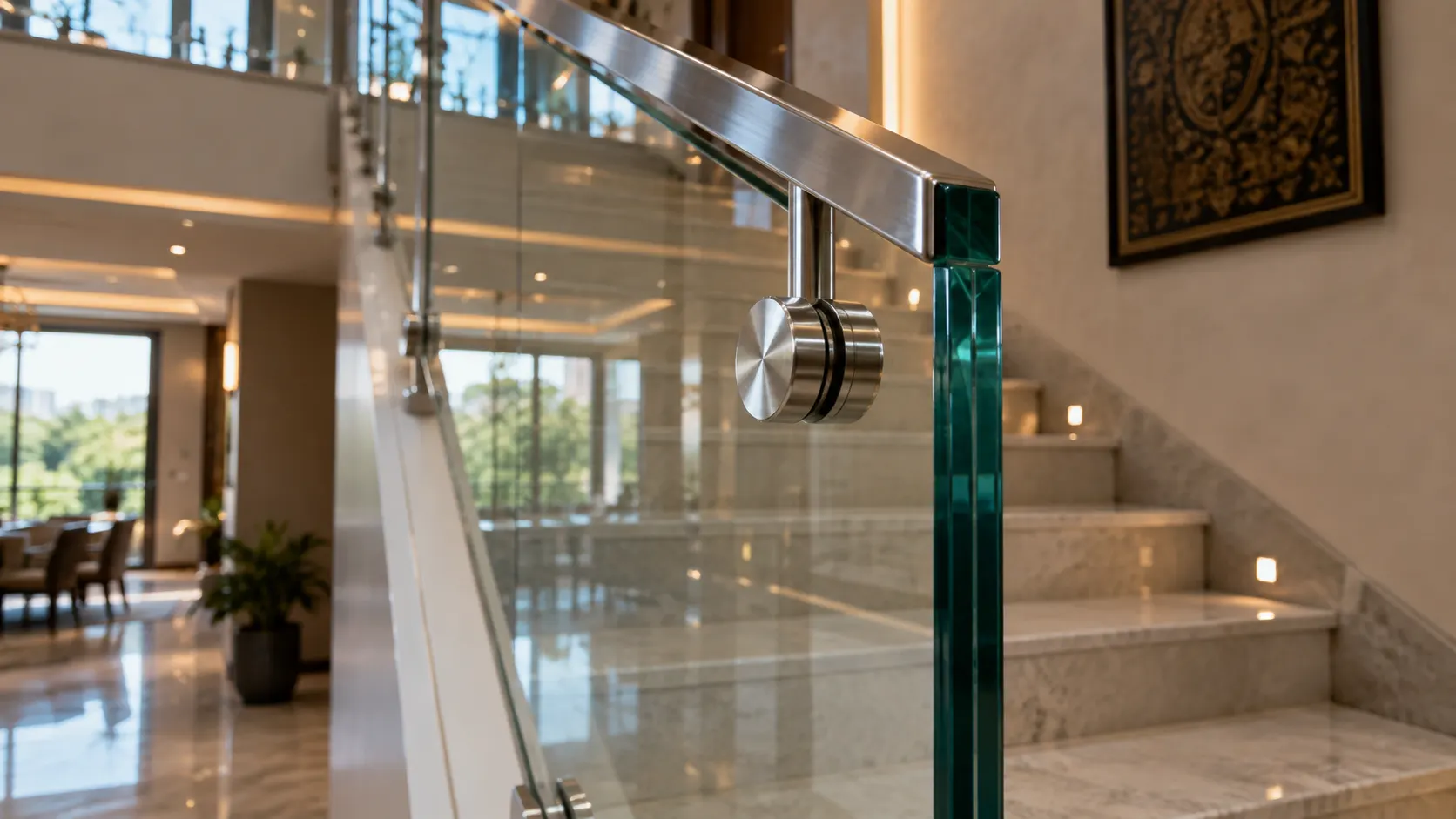
Remember that these are indicative ranges to help you plan; taller panels, custom finishes, and tricky installation can all shift the final rate for your Baddi home.
Get an accurate Baddi quote
Because so many factors affect the per-running-foot rate, the only way to get a truly accurate price is a proper site measurement and quotation.
A good installer will measure your total railing length and height, discuss glass grade, framed versus frameless, and hardware, and then give you a clear per-running-foot rate and total.
Use the ranges in this guide to set your budget, then request a tailored quote so you know exactly what your glass railing will cost.
Frequently Asked Questions
Glass railings are typically priced per running foot, so the cost depends on the total length you need multiplied by the rate. That rate varies with glass thickness, framed or frameless design, and the quality of the fittings.
Frameless railings rely on thicker glass and precision stainless fittings to stay strong without visible posts, which raises the per-running-foot rate compared with framed designs that use supporting posts.
For most homes, 12mm toughened glass is a reliable choice, while frameless or elevated designs may need thicker or laminated glass for extra safety. Your installer can recommend the right grade.
Yes. Quality stainless steel fittings cost more but resist corrosion and keep the railing safe for years, while cheaper hardware can rust or loosen, making it a poor choice for a safety barrier.
Contact Inspire Windoors for an accurate per-running-foot quote, explore framed and frameless options, and get a free site measurement and consultation for your project today.


0 Comments
No comments yet. Be the first to share your thoughts!